
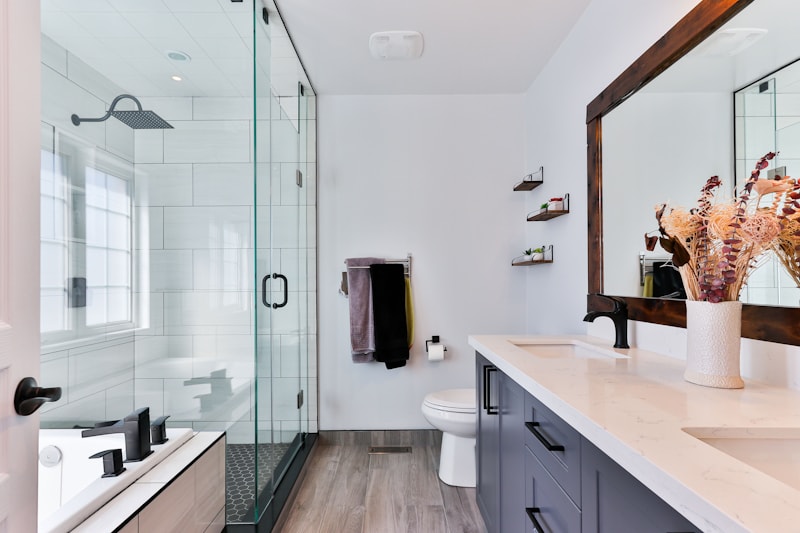
If your bathtub is rarely used, difficult to clean, or taking up valuable bathroom space, replacing it with a custom shower can be one of the most practical bathroom upgrades you can make.
A tub-to-shower conversion in Chandler, AZ can transform an outdated tub enclosure into a more open, accessible, and functional shower without necessarily changing the entire bathroom layout.
Depending on the existing space, homeowners can choose from a simple tub replacement, a tiled walk-in shower, a curbless shower, a frameless glass enclosure, or a larger custom shower with built-in storage and seating.
Chandler homes also have a few local considerations worth planning for, including hard-water mineral buildup, existing plumbing configurations, slab construction, tile selection, and the condition of the wall and floor surfaces behind the old tub.
This guide covers practical tub-to-shower conversion ideas for Chandler homeowners, from layout and design choices to waterproofing, accessibility, materials, and project planning.
What Is a Tub-to-Shower Conversion?
A tub-to-shower conversion removes an existing bathtub and replaces it with a dedicated shower.
In many bathrooms, the new shower can occupy approximately the same footprint as the old tub, which makes the conversion more straightforward than completely changing the bathroom layout.
A typical conversion may include:
- Removing the existing bathtub
- Demolishing the old surround
- Inspecting the framing and substrate
- Modifying the plumbing
- Installing a new shower drain
- Preparing the shower floor
- Installing a waterproofing system
- Installing wall and floor tile
- Adding a shower valve and fixtures
- Installing a niche or shower storage
- Installing a glass enclosure or shower door
- Finishing the surrounding bathroom surfaces
The exact scope depends on the existing bathroom and the type of shower you want to create.
1. Keep the Existing Tub Footprint
One of the simplest conversion ideas is to remove the tub and build the shower in approximately the same location.
This approach works especially well for standard alcove bathtubs.
Why homeowners choose this layout
Keeping the existing footprint can reduce the amount of structural and plumbing modification required.
You can still dramatically change the appearance of the bathroom by upgrading:
- Shower tile
- Shower floor
- Glass
- Fixtures
- Storage
- Lighting
- Shower controls
- Waterproofing
A basic tub enclosure can therefore become a completely different-looking walk-in shower without relocating the entire bathroom.
Design idea
Use large-format porcelain wall tile with a smaller mosaic tile on the shower floor.
The larger wall tile creates fewer grout joints, while mosaic flooring provides smaller tile pieces that can work well with a sloped shower floor.
2. Create an Expanded Walk-In Shower
If the bathroom layout allows it, removing an existing tub can provide an opportunity to create a larger shower.
This is particularly useful in master bathrooms where an oversized garden tub occupies a significant amount of floor area.
An expanded shower can include:
- Larger shower floor
- Frameless glass enclosure
- Built-in bench
- Multiple shower fixtures
- Recessed niche
- Handheld shower
- Rain showerhead
- Linear drain
Instead of replacing the bathtub with another compact enclosure, you can design the space around how you actually use the bathroom.
3. Install a Curbless Tub-to-Shower Conversion
A curbless shower removes the raised threshold between the bathroom floor and shower floor.
This creates a clean transition and can make the bathroom feel more open.
It can also be useful for homeowners who want an aging-in-place bathroom or easier shower access.
A successful curbless conversion requires more planning than simply removing the shower curb.
The contractor needs to coordinate:
- Shower floor elevation
- Drain location
- Waterproofing
- Floor slope
- Bathroom floor height
- Shower glass
- Door opening
- Waterproof transitions
For some existing bathrooms, achieving a true curbless entry may require additional floor or framing work.
4. Add a Frameless Glass Enclosure
Glass can dramatically change the appearance of a tub-to-shower conversion.
A frameless enclosure allows more of the tile design to remain visible and can make a smaller bathroom feel more open.
Popular options include:
Fixed Glass Panel
A single glass panel provides an open appearance and works well for larger shower layouts.
Frameless Shower Door
A hinged glass door provides a traditional enclosed shower while maintaining a clean appearance.
Fixed Panel + Door
This combination provides a balance between openness and water containment.
Sliding Glass Door
A sliding enclosure can be useful where there isn't enough room for a hinged door to swing outward.
When choosing glass, consider the shower size, entry location, hardware, ventilation, and water spray pattern.
5. Add a Built-In Shower Niche
A tub-to-shower conversion is an opportunity to eliminate clutter from the shower floor.
Instead of using hanging organizers or shelves, a recessed wall niche can provide dedicated storage for:
- Shampoo
- Conditioner
- Body wash
- Soap
- Razors
- Other shower products
A niche should be planned before the wall is closed because its location needs to work with the framing, plumbing, waterproofing, and tile layout.
For a cleaner appearance, many homeowners choose a niche with the same tile as the shower walls or use an accent tile to create contrast.
6. Add a Built-In Shower Bench
A built-in bench can make a larger walk-in shower more comfortable and functional.
It can be used for:
- Sitting while showering
- Shaving
- Placing shower products
- Supporting accessibility needs
The bench should be designed as part of the waterproofing system rather than added as an afterthought.
For smaller showers, a compact corner bench or appropriately sized fold-down seat may provide useful functionality without taking up too much floor area.
7. Choose a Chandler-Friendly Tile Design
Tile selection has a major impact on the appearance and maintenance of your new shower.
For Chandler homes, porcelain tile is often a practical option because it is durable and available in a wide range of styles.
Popular design directions include:
Large-Format Porcelain
Large tiles create a contemporary appearance while reducing the number of grout joints.
Stone-Look Porcelain
Stone-look porcelain can provide the appearance of marble, travertine, or other natural materials with generally easier maintenance.
Warm Desert Tones
Sand, beige, taupe, warm gray, and earth-tone finishes can complement Chandler's desert surroundings.
Modern Neutral Design
White, light gray, cream, and natural wood tones can create a bright, timeless bathroom.
Accent Wall
Use a contrasting tile inside the niche or on a feature wall rather than covering every surface with multiple competing patterns.
8. Consider Hard Water When Choosing Shower Materials
Chandler homeowners also need to think about mineral buildup when selecting bathroom finishes.
Hard water can leave deposits on:
- Shower glass
- Faucets
- Showerheads
- Grout
- Tile surfaces
The best design isn't necessarily the one that looks perfect on installation day. It should also be practical to maintain.
Consider these choices:
Porcelain tile: Dense porcelain can be a practical choice for shower walls and floors.
Epoxy grout: Epoxy grout can provide a non-porous grout option that is resistant to staining and moisture absorption.
Glass treatment: A suitable protective treatment can make shower glass easier to maintain.
Brushed hardware: Brushed finishes can be less visually unforgiving of water spots than highly polished finishes.
You can also learn more about the effects of Chandler's water conditions in our guide to hard water and bathroom tile in Chandler, AZ.
9. Upgrade the Shower Fixtures
Replacing the bathtub also gives you the opportunity to redesign the shower controls.
A basic conversion might include:
- Single showerhead
- Standard pressure-balancing valve
- Handheld shower
A more customized shower can include:
- Rain showerhead
- Handheld wand
- Multiple spray functions
- Thermostatic or pressure-balancing controls
- Separate volume controls
Fixture selection should be coordinated with the existing plumbing and the available water supply.
10. Add a Linear Shower Drain
A linear drain can provide a modern appearance and work particularly well with larger-format shower-floor tile.
Instead of placing a small round drain in the middle of the shower, a linear drain can be positioned along an edge of the shower floor depending on the system and layout.
This can also work well with curbless shower designs.
However, the drain location should be determined during the planning stage because it affects:
- Shower floor slope
- Waterproofing
- Plumbing
- Tile layout
- Floor elevation
11. Choose a Low-Maintenance Shower Floor
The shower floor needs to balance appearance, traction, drainage, and maintenance.
Smaller-format porcelain mosaics are commonly used because their smaller pieces can accommodate the slope of a shower floor while providing multiple grout joints for traction.
Popular choices include:
- Hexagon mosaic tile
- Square mosaic tile
- Pebble-look porcelain
- Small-format porcelain
- Coordinated accent tile
Avoid selecting a shower floor solely because the tile looks attractive in a showroom.
Your contractor should also consider the tile's suitability for wet-floor applications, surface texture, drainage, and installation requirements.
12. Create a Spa-Inspired Shower
If you are converting a large garden tub, you may have enough space to create a more luxurious shower.
A spa-style shower can include:
- Large-format tile
- Frameless glass
- Rain showerhead
- Handheld shower
- Built-in bench
- Recessed niche
- Linear drain
- Accent lighting
- Decorative tile
- Multiple storage areas
The key is to choose features that improve how you actually use the shower rather than adding expensive components simply for appearance.
13. Design for Aging in Place
A tub-to-shower conversion can be a good opportunity to improve bathroom accessibility.
Features can include:
- Curbless entry
- Wider shower entrance
- Handheld showerhead
- Built-in bench
- Properly positioned grab-bar blocking
- Slip-resistant flooring
- Easy-to-reach controls
If accessibility is important, the design should be planned before demolition so structural reinforcement and plumbing locations can be addressed during construction.
14. Should You Keep a Bathtub?
One of the most common questions homeowners ask before converting a tub is whether they should remove it completely.
There isn't one answer for every household.
Consider keeping at least one bathtub if:
- You have young children
- Your home has multiple bathrooms
- The remaining bathrooms don't have a tub
- Your household regularly uses a bathtub
On the other hand, converting an unused master-bath garden tub into a large walk-in shower can make sense when the household rarely uses a tub.
The decision should be based on how you use your home rather than following a universal rule.
15. Tub-to-Shower Conversion Ideas for Older Chandler Homes
Older Chandler properties can present different conditions from newer construction.
During demolition, a remodeling contractor may discover:
- Damaged drywall
- Previous water intrusion
- Deteriorated framing
- Old plumbing components
- Improper previous waterproofing
- Outdated shower drains
- Uneven substrates
That is why a proper conversion should include inspection of the area behind the existing tub surround.
Covering an existing problem with new tile doesn't solve the underlying issue.
What Happens During a Tub-to-Shower Conversion?
A typical project follows several stages.
Step 1: Design Consultation
The project begins with discussing:
- Shower size
- Layout
- Tile
- Glass
- Fixtures
- Storage
- Accessibility
- Budget
Step 2: Bathroom Evaluation
The existing tub, plumbing, walls, floor, and surrounding construction are evaluated.
Step 3: Demolition
The existing bathtub and surrounding materials are removed.
Step 4: Plumbing Preparation
The shower drain, valve, and other plumbing components are adjusted as required by the new design.
Step 5: Substrate Preparation
The walls and floor are prepared for the new shower assembly.
Step 6: Waterproofing
A compatible waterproofing system is installed and detailed around corners, penetrations, niches, benches, and the shower floor.
For projects using Schluter KERDI, the system is installed according to the manufacturer's requirements.
Step 7: Tile Installation
Wall and floor tile are installed according to the planned layout.
Step 8: Glass and Fixtures
The shower glass, hardware, fixtures, shelves, niche components, and other finishing elements are installed.
Step 9: Final Inspection
The finished shower is reviewed for appearance, function, drainage, and finishing details.
How Much Does a Tub-to-Shower Conversion Cost in Chandler?
The price of a tub-to-shower conversion depends heavily on the scope of work.
Important cost factors include:
- Size of the existing tub
- Demolition requirements
- Plumbing modifications
- Shower drain configuration
- Waterproofing system
- Tile selection
- Shower glass
- Fixtures
- Shower niche
- Bench
- Curbless construction
- Existing water damage
- Substrate repairs
A straightforward tub replacement can have a very different price from a custom curbless walk-in shower with premium tile, frameless glass, multiple fixtures, and structural modifications.
For a more detailed discussion of project pricing, see our tub-to-shower conversion cost guide.
Common Tub-to-Shower Conversion Mistakes
Choosing the Design Before Checking the Plumbing
A beautiful layout may not be practical if the existing drain and water lines make the proposed configuration difficult or expensive.
Forgetting About the Shower Door
The shower door needs enough clearance to operate safely without hitting the vanity, toilet, wall, or other fixtures.
Poor Waterproofing
Tile and grout are not a substitute for a properly designed waterproofing system.
Using Too Many Different Materials
Combining too many tile patterns, colors, textures, and metals can make a small bathroom feel visually crowded.
Ignoring Maintenance
A shower that looks impressive but requires constant cleaning may not be the best choice for your household.
Not Planning Storage
If the shower doesn't have a niche, shelf, or other storage solution, homeowners often end up adding unattractive organizers later.
Is a Tub-to-Shower Conversion Worth It?
For many Chandler homeowners, the answer can be yes—particularly when an existing bathtub is rarely used.
The biggest benefits can include:
- Easier shower access
- More usable shower space
- Updated bathroom appearance
- Improved storage
- Modern glass enclosure options
- Better integration with accessibility features
- Easier daily use
- Opportunity to address outdated plumbing and waterproofing
However, the value of the conversion depends on the existing bathroom, the quality of the new installation, and the needs of the household.
Why Chandler Homeowners Choose ARZ Home Remodeling
At ARZ Home Remodeling, we approach tub-to-shower conversions as complete shower remodeling projects rather than simply removing a bathtub and installing a shower pan.
Our process can include:
- Tub removal
- Shower layout planning
- Plumbing modifications
- Waterproofing
- Custom tile installation
- Shower niches
- Built-in benches
- Curbless shower construction
- Frameless glass
- Shower fixture installation
- Final finishing
For applicable custom tiled shower projects, we use Schluter KERDI waterproofing systems and coordinate the waterproofing, tile, drainage, and shower components as one assembly.
We also consider Chandler-specific concerns such as hard-water maintenance and the existing construction of the home.
Frequently Asked Questions
Can I replace my bathtub with a walk-in shower?
Yes. Many standard tub areas can be converted into dedicated walk-in showers. The exact design depends on the existing footprint, plumbing, floor construction, and desired shower configuration.
How long does a tub-to-shower conversion take?
The timeline depends on the scope, materials, plumbing modifications, shower size, tile, glass, and any unexpected conditions discovered during demolition. A simple conversion can be considerably faster than a fully customized bathroom renovation.
Can I make my tub-to-shower conversion curbless?
In many bathrooms, a curbless design is possible, but it depends on floor elevation, drainage, framing, waterproofing, and the existing construction. The feasibility should be evaluated before demolition begins.
Should I use large-format tile for my new shower?
Large-format porcelain can provide a clean, modern appearance with fewer grout joints. However, the tile size should be selected based on the shower layout, wall conditions, floor slope, and installation requirements.
Can I add a niche during a tub-to-shower conversion?
Yes. A recessed niche can be planned during the wall construction stage. Its location should be coordinated with framing and plumbing before waterproofing and tile installation.
Is epoxy grout worth using in a Chandler shower?
Epoxy grout can be a useful option where homeowners want a non-porous grout that resists staining and moisture absorption. Product selection should be based on the specific shower application and installation requirements.
Can you convert a garden tub into a walk-in shower?
Yes. Large garden tubs can sometimes provide an opportunity to create a significantly larger shower. The final possibilities depend on the existing bathroom layout and the construction underneath the tub.
Do I need a permit for a tub-to-shower conversion in Chandler?
Permit requirements depend on the specific scope of the project, particularly when plumbing, electrical, structural, or other regulated work is involved. Your remodeling contractor should evaluate the project and determine which approvals are required.
Ready to Replace Your Old Tub?
If your bathtub is taking up valuable space and you rarely use it, a custom shower can give your Chandler bathroom a completely different feel.
From a straightforward tub replacement to a large curbless walk-in shower with custom tile, niches, seating, and frameless glass, the right design depends on your bathroom layout, lifestyle, and budget.
ARZ Home Remodeling provides tub-to-shower conversions and bathroom remodeling services for homeowners in Chandler and surrounding East Valley communities.
Call (520) 569-3339 to schedule your free in-home estimate.
Ready for a better shower? Get your free estimate today.
Related Chandler Bathroom Remodeling Resources
- Walk-In Shower Cost in Chandler, AZ
- Bathroom Remodeling Cost in Chandler, AZ
- Schluter KERDI vs RedGard: Arizona Shower Waterproofing
- How Chandler Hard Water Affects Bathroom Tile & Grout
- Walk-In Shower Remodeling in Chandler
- Bathroom Tile Installation in Chandler
- Master Bathroom Remodeling in Chandler
- Tub-to-Shower Conversion Services