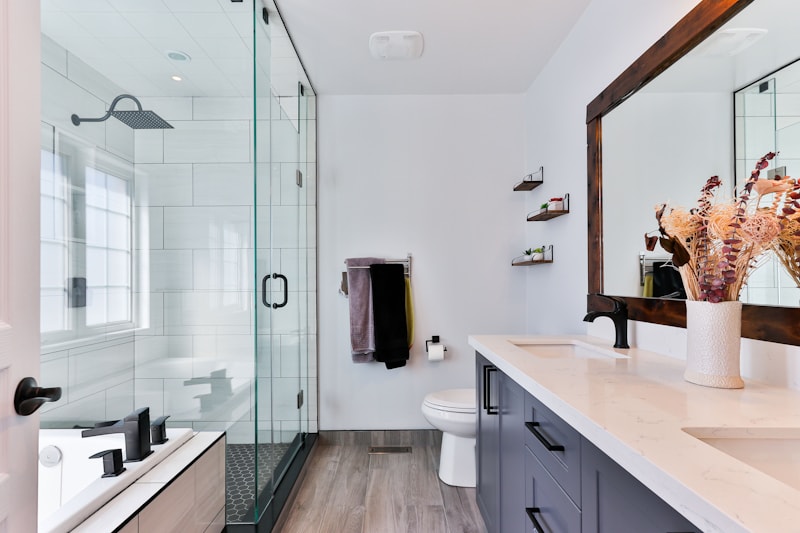

When you're remodeling a bathroom in Chandler, Arizona, the tile, glass, vanity, and fixtures may be the most visible parts of the project—but the waterproofing underneath the tile is one of the most important.
A shower can look perfect when construction is finished and still develop problems later if water is allowed to reach the framing, substrate, or subfloor.
Two commonly discussed waterproofing options are Schluter KERDI, a sheet-applied membrane system, and RedGard, a liquid-applied waterproofing membrane. Both products are designed for waterproofing tile installations, but they use very different installation methods.
For Chandler homeowners planning a walk-in shower, tub-to-shower conversion, or complete bathroom renovation, understanding those differences can make it easier to evaluate a remodeling proposal.
At ARZ Home Remodeling, we use waterproofing methods selected for the specific shower design, substrate, and installation requirements. This guide explains how KERDI and RedGard work, where each system fits, and what Chandler homeowners should look for before tile is installed.
Quick Comparison: Schluter KERDI vs RedGard
| Feature | Schluter KERDI | RedGard |
|---|---|---|
| Waterproofing type | Sheet-applied membrane | Liquid-applied membrane |
| Application | Installed in sheets with thin-set mortar | Rolled, brushed, or troweled onto the substrate |
| Thickness | Factory-controlled membrane thickness | Depends on proper application thickness |
| Tile installation | Tile can be installed over properly prepared membrane | Tile is installed after the membrane has properly cured |
| Shower walls | Yes | Yes |
| Shower floors | Used as part of a compatible shower system | Can be used in compatible shower applications |
| Seams | Overlapped/sealed according to manufacturer's system | Continuous coating when properly applied |
| Best suited for | Custom shower systems and detailed waterproofing assemblies | Projects where a liquid membrane is appropriate |
| Installer skill | Important for seams, corners, penetrations, and transitions | Important for coverage, thickness, curing, and detailing |
The important point is that neither product should be judged only by the name on the bucket or roll. Waterproofing performance depends heavily on correct substrate preparation, coverage, seams, corners, penetrations, drainage, and installation according to the manufacturer's requirements.
What Is Schluter KERDI?
Schluter KERDI is a sheet-applied waterproofing membrane designed for use behind tiled surfaces in wet areas such as showers and bathtub surrounds.
The membrane consists of a polyethylene-based core with fleece on both sides. The fleece allows the membrane to bond to the substrate with thin-set mortar.
One advantage of a sheet membrane is that its membrane thickness is manufactured rather than created by repeatedly coating the wall with liquid material. Schluter lists standard KERDI at 8 mil thickness and describes it as a bonded waterproofing membrane and vapor retarder.
For Chandler bathroom remodeling projects, a KERDI-based shower assembly can be incorporated with compatible components such as shower trays, drains, corners, and other waterproofing accessories.
How KERDI Is Installed
A properly installed KERDI shower involves much more than simply putting a sheet on the wall.
The installation typically requires:
- Preparing a suitable substrate
- Applying the appropriate thin-set mortar
- Embedding the membrane without voids
- Treating seams and transitions correctly
- Waterproofing inside and outside corners
- Sealing plumbing penetrations
- Properly waterproofing niches and benches
- Connecting the wall waterproofing to the shower floor system
- Detailing the drain connection correctly
- Following the manufacturer's installation requirements
The goal is to create a continuous waterproofing layer behind the finished tile.
What Is RedGard?
RedGard is a liquid-applied waterproofing and crack-prevention membrane.
Instead of installing a manufactured sheet, the product is applied directly to a properly prepared substrate using the application method specified by the manufacturer.
This approach can be useful when the geometry of a project makes a liquid-applied membrane practical, particularly around irregular surfaces and transitions.
However, liquid waterproofing requires careful application. The installer needs to achieve the manufacturer's specified coverage and dry-film requirements rather than simply painting the product onto the wall like ordinary paint.
How RedGard Is Installed
A professional installation requires attention to:
- Substrate preparation
- Required coverage
- Application thickness
- Corners and transitions
- Seams and joints
- Plumbing penetrations
- Shower niches
- Bench areas
- Drain transitions
- Required curing time
- Manufacturer installation instructions
The quality of the finished waterproofing depends on the complete system and how carefully it is installed.
Schluter KERDI vs RedGard: The Most Important Differences
1. Sheet Membrane vs Liquid Membrane
The fundamental difference is how the waterproofing layer is created.
KERDI is manufactured as a sheet.
The installer cuts and places the membrane over the prepared surface and creates a continuous waterproofing assembly by properly treating overlaps, seams, corners, penetrations, and transitions.
RedGard is applied as a liquid.
The installer builds the waterproofing layer through controlled application and must achieve the manufacturer's specified coverage and thickness.
Neither approach eliminates the need for skilled installation.
2. Installation Consistency
One reason contractors may choose a sheet membrane is the factory-controlled nature of the membrane itself.
With KERDI, the membrane arrives at a consistent manufactured thickness. The installation challenge is primarily making sure the membrane is properly bonded and all connections are correctly detailed.
With a liquid membrane, application quality becomes especially important. Inadequate coverage or insufficient thickness can compromise the waterproofing assembly.
This does not mean every KERDI installation is automatically better than every RedGard installation. A poorly installed sheet membrane can still fail.
The installer and the complete waterproofing assembly matter just as much as the product selected.
3. Corners, Niches, Benches & Penetrations
Custom showers contain numerous areas where waterproofing needs special attention.
Examples include:
- Shower niches
- Built-in benches
- Inside corners
- Outside corners
- Plumbing penetrations
- Shower valve openings
- Handheld shower connections
- Showerhead penetrations
- Tub-to-shower transitions
- Floor-to-wall transitions
These areas deserve careful detailing regardless of which waterproofing method is selected.
Schluter also offers preformed waterproofing components designed for specific transitions and corners, including components for curbless shower applications.
For a custom Chandler walk-in shower, these details are often more important than simply asking whether the contractor uses a particular brand.
Is Schluter KERDI Waterproof?
Yes.
Schluter describes KERDI as a sheet-applied bonded waterproofing membrane for tiled wet areas. The company specifically identifies it for applications including tiled showers and bathtub surrounds.
However, homeowners should understand an important distinction:
A waterproof membrane does not automatically make an entire shower waterproof if the surrounding assembly is installed incorrectly.
Waterproofing also depends on:
- Correct shower-pan construction
- Proper drain connection
- Proper membrane transitions
- Sealed penetrations
- Correct corners
- Proper slope toward the drain
- Correct substrate preparation
- Manufacturer-compliant installation
A contractor should be able to explain how all of these pieces work together.
Is RedGard Good for Shower Waterproofing?
RedGard can be used as a waterproofing membrane in compatible tile installations when installed according to the manufacturer's requirements.
The important question is not simply:
"Do you use RedGard?"
A better question is:
"How will you prepare, apply, detail, cure, and test the complete waterproofing system?"
That question gives a homeowner much more useful information about the contractor's process.
A liquid membrane can perform properly when the substrate and application are appropriate and the manufacturer's requirements are followed.
Which Waterproofing System Is Better for a Chandler Shower?
There isn't one universal answer for every bathroom.
The appropriate waterproofing method depends on the:
- Shower design
- Substrate
- Drain configuration
- Shower size
- Number of corners and penetrations
- Curbless or standard entry
- Bench and niche design
- Manufacturer requirements
- Installer experience
At ARZ Home Remodeling, we commonly specify Schluter KERDI-based shower systems for custom tiled shower projects because the sheet membrane and compatible system components provide a structured approach to waterproofing.
For homeowners comparing contractors, however, we recommend evaluating the entire waterproofing assembly, not simply choosing a company because it mentions KERDI or RedGard.
Why Waterproofing Matters in Chandler, AZ
Chandler's desert environment creates its own considerations for bathroom remodeling.
Homes throughout Chandler range from older properties with original bathroom construction to newer homes with builder-grade shower systems.
During a renovation, contractors may encounter:
- Older shower assemblies
- Damaged substrates
- Aging plumbing
- Previous water damage
- Outdated shower pans
- Poorly sealed penetrations
- Inadequate drainage
- Previous remodeling work
That is why demolition and inspection are important before a new shower is installed.
A contractor should not assume that the existing substrate is suitable simply because the finished bathroom appears functional.
Waterproofing Is Especially Important for Walk-In Showers
Walk-in showers have become one of the most popular bathroom upgrades in Chandler.
Homeowners often replace:
- Fiberglass shower surrounds
- Acrylic tub/shower combinations
- Large garden tubs
- Outdated framed shower enclosures
with:
- Custom tiled walk-in showers
- Curbless showers
- Frameless glass enclosures
- Built-in niches
- Shower benches
- Linear drains
- Handheld shower systems
These upgrades can create a beautiful bathroom, but they also increase the number of waterproofing details that need to be addressed.
For example, a curbless shower requires careful coordination between the shower floor elevation, drain, waterproofing, tile assembly, and bathroom floor.
KERDI for Curbless and Custom Shower Designs
Curbless showers require careful planning because the shower entry does not have the raised threshold found in a conventional shower.
The waterproofing system needs to transition correctly from the shower floor into the surrounding bathroom floor.
A custom shower may also contain:
- A linear drain
- Multiple shower fixtures
- A tiled bench
- A recessed niche
- Frameless glass
- Large-format wall tile
- Mosaic shower-floor tile
These components should be considered during the design stage rather than after construction has already started.
Schluter provides dedicated waterproofing components for certain curbless shower configurations, including preformed KERDI corners for floor/wall and shower-base connections.
What About Steam Showers?
Steam showers require additional vapor-management considerations.
Homeowners should not assume that standard shower waterproofing and continuous-use steam-room construction are identical.
Schluter specifically identifies KERDI-DS as a bonded waterproofing membrane and vapor retarder designed for continuous-use steam rooms and similar applications. KERDI-DS is listed at 20 mil thickness with a reported water vapor permeance of 0.19 perms.
Therefore, when planning a steam shower, ask the remodeling contractor exactly which membrane, components, assemblies, and installation requirements will be used.
What Should Be Included in a Professional Shower Waterproofing Proposal?
Before hiring a bathroom remodeling company in Chandler, ask for waterproofing details in writing.
A good proposal should identify the major components of the shower assembly, including:
Substrate Preparation
What substrate will be installed behind the tile?
Waterproofing Membrane
Will the project use a sheet membrane or liquid-applied membrane?
Shower Floor
How will the shower floor be waterproofed and sloped toward the drain?
Corners & Seams
How will transitions, corners, and membrane seams be treated?
Plumbing Penetrations
How will shower valves, showerheads, and other penetrations be sealed?
Niches & Benches
How will built-in niches and benches be waterproofed?
Drain Connection
How will the waterproofing connect to the shower drain?
Testing & Inspection
Will the completed shower assembly be inspected or water-tested before tile installation or project completion?
These questions can reveal much more about a contractor's construction process than simply asking which waterproofing brand they use.
KERDI vs RedGard: What Chandler Homeowners Should Ask
If you're comparing two bathroom remodeling companies, ask both contractors the same questions:
- Which waterproofing system are you proposing?
- Why is that system appropriate for my shower?
- What substrate will be installed behind the tile?
- How will the shower pan be waterproofed?
- How will corners and seams be treated?
- How will the plumbing penetrations be sealed?
- How will the niche and bench be waterproofed?
- How will the drain connect to the waterproofing?
- How long does the waterproofing require before the next installation stage?
- Will the completed assembly be inspected or tested?
A contractor who can clearly explain the entire waterproofing sequence gives you a better basis for comparing proposals.
Common Shower Waterproofing Mistakes to Avoid
Waterproofing Only the Visible Shower Area
Water can travel through transitions and penetrations. Waterproofing needs to be planned as a complete assembly rather than as isolated patches.
Treating Cement Board as the Waterproofing
Cement-based backer boards can provide a suitable substrate for tile, but the substrate and waterproofing layer are not necessarily the same thing.
Your contractor should clearly explain where the actual waterproofing layer is located.
Ignoring Plumbing Penetrations
A beautiful waterproof membrane does not help if plumbing penetrations are left improperly sealed.
Poor Shower Drainage
Waterproofing and drainage work together. The shower floor needs the appropriate slope toward the drain so water does not remain where it should not.
Rushing the Waterproofing Stage
The waterproofing layer is hidden once the tile is installed.
That makes proper preparation especially important because homeowners cannot easily inspect the membrane after the walls and floor are finished.
How ARZ Home Remodeling Approaches Shower Waterproofing
At ARZ Home Remodeling, we treat waterproofing as a core part of the shower construction process rather than an afterthought.
For applicable custom tiled shower projects, our process includes:
1. Evaluate the Existing Bathroom
We inspect the existing shower, tub, substrate, plumbing, and surrounding areas before determining the new layout.
2. Plan the Shower Assembly
The shower layout is coordinated around the drain, fixtures, niches, benches, glass, and tile.
3. Prepare the Substrate
Damaged or unsuitable materials are addressed before the waterproofing system is installed.
4. Install the Waterproofing System
For projects using a Schluter KERDI assembly, the membrane and compatible components are installed according to the manufacturer's requirements.
5. Detail Transitions and Penetrations
Corners, seams, plumbing penetrations, niches, benches, and floor transitions receive careful attention.
6. Complete Tile Installation
Only after the waterproofing stage is properly addressed do we proceed with the finished tile installation.
7. Complete the Shower Finish
The final installation can include custom tile, grout, shower fixtures, niches, benches, and glass enclosure options.
The objective is simple: create a shower that looks exceptional while giving proper attention to the construction hidden behind the finished surfaces.
How Much Does Shower Waterproofing Cost in Chandler?
Waterproofing is normally only one part of a complete shower remodeling project.
The overall cost can change substantially depending on:
- Shower size
- Demolition requirements
- Existing water damage
- Shower-pan configuration
- Drain relocation
- Plumbing changes
- Tile selection
- Glass enclosure
- Niches
- Benches
- Curbless construction
- Fixture upgrades
- Substrate repairs
A simple shower replacement and a complete custom curbless walk-in shower should not be expected to have the same project cost.
For a more complete discussion of walk-in shower pricing, see our guide to Walk-In Shower Cost in Chandler, AZ.
Schluter KERDI vs RedGard: Final Takeaway
Both Schluter KERDI and RedGard are waterproofing products designed for tile applications, but they approach waterproofing differently.
KERDI is a sheet-applied membrane system, while RedGard is a liquid-applied membrane.
For Chandler homeowners, the most important consideration is not simply which product has the better name. The critical issue is whether the contractor has designed and installed a complete waterproofing assembly appropriate for the shower.
For custom Chandler bathroom remodeling projects, ARZ Home Remodeling uses Schluter KERDI-based systems where appropriate and focuses on careful substrate preparation, membrane installation, shower-floor detailing, penetrations, transitions, and finished tile installation.
If you're planning a walk-in shower, tub-to-shower conversion, or complete bathroom renovation in Chandler, we can evaluate your existing space and discuss the waterproofing approach that fits your project.
Planning a Bathroom Remodel in Chandler?
Don't choose a contractor based only on the tile samples or the lowest initial estimate.
Ask what is happening behind the tile.
A properly planned shower should account for waterproofing, drainage, plumbing, substrate preparation, tile installation, and the final glass enclosure as one coordinated system.
Call (520) 569-3339 to discuss your Chandler bathroom remodeling project and schedule a free in-home estimate.
Ready to build a better shower? Get your free estimate today.
Related Chandler Bathroom Remodeling Resources
- Bathroom Remodeling in Chandler, AZ
- Walk-In Shower Remodeling
- Walk-In Shower Cost in Chandler, AZ
- Tub-to-Shower Conversion
- Bathroom Tile Installation
- How Chandler Hard Water Affects Bathroom Tile & Grout
- Bathroom Remodeling Cost in Chandler, AZ
About ARZ Home Remodeling
ARZ Home Remodeling helps homeowners plan and complete bathroom remodeling projects in Chandler and surrounding East Valley communities. Our work includes custom walk-in showers, tub-to-shower conversions, tile installation, bathroom renovations, and other residential remodeling improvements.